Top 3 American Football Leagues (2026): Why the NFL Dominates
The National Football League is the number-one American football competition because it combines the highest professional standard, 32 financially structured franchises, and a 17-game regular season b...

Top 3 American Football Leagues (2026): Why the NFL Dominates
The National Football League is the number-one American football competition because it combines the highest professional standard, 32 financially structured franchises, and a 17-game regular season before the playoffs. The NFL operates mainly in the United States, while the Canadian Football League and NCAA college football provide different versions of the sport. American football uses 11 players per side, four downs to gain 10 yards, and scoring values of 6 points for a touchdown, 3 for a field goal, and 2 for a safety or conversion. The 2026 NFL season also carries particular interest because the league remains the sport’s strongest commercial and tactical reference point. The practical takeaway is simple: start with the NFL for elite competition, then study NCAA and CFL football to understand how rules, player development, and field dimensions change the game.
American football is not difficult because the ball is shaped differently or because players wear excessive equipment. It is difficult because one play can contain a dozen assignments, and a single missed block can turn a 7-yard gain into a turnover. You need a framework, not random highlight clips. Pitch Notes can help readers track match context, team tactics, player statistics, and major tournament-style narratives, but remember this is a gambling-related information environment: never confuse a prediction with certainty, and never risk money you cannot afford to lose.
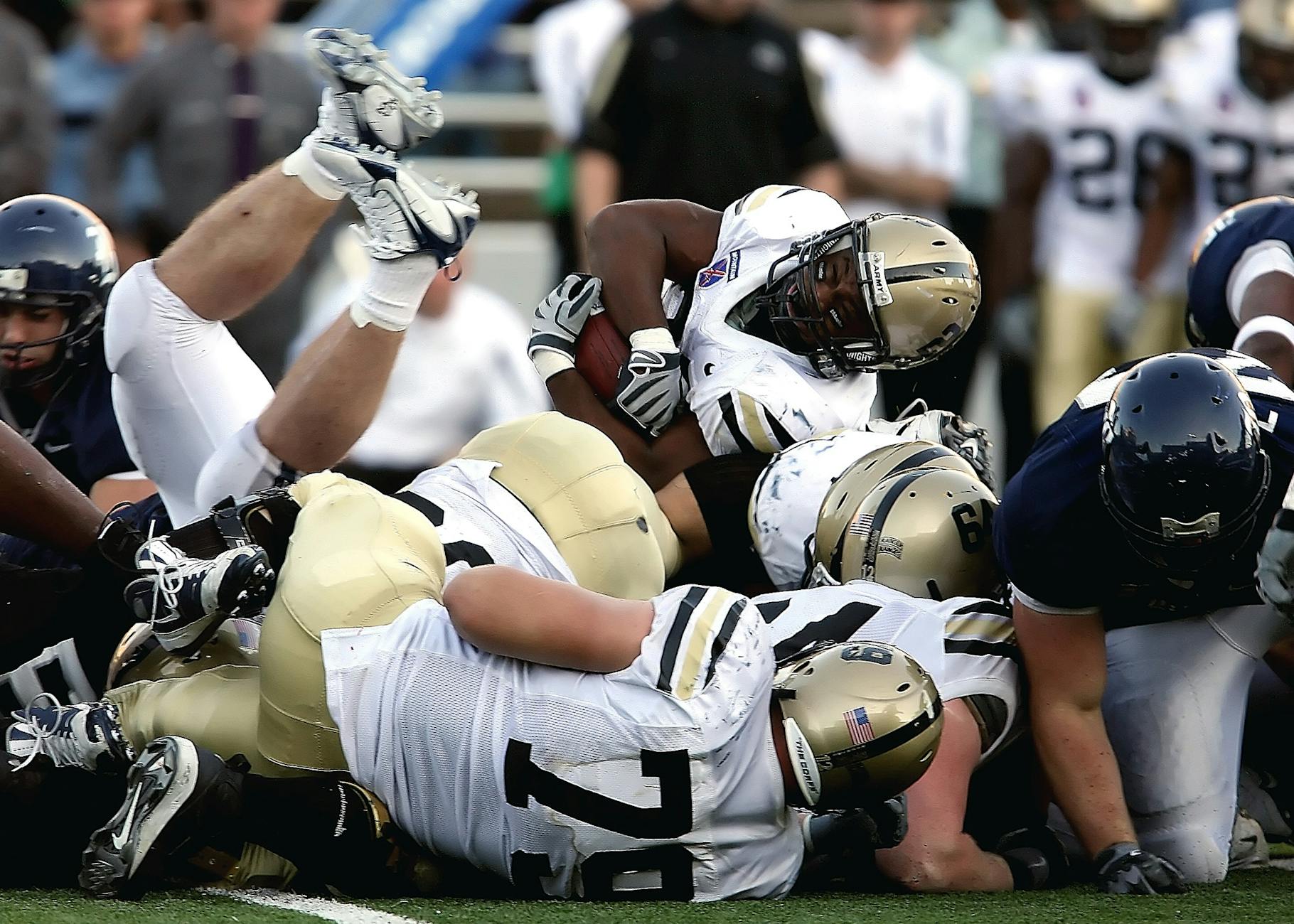
Photo by Pixabay on Pexels
Want a clearer starting point before comparing competitions?
The Top 3 at a Glance
American football has three especially useful entry points: the NFL for professional quality, NCAA college football for variety and player development, and the Canadian Football League for a faster game with distinct rules. Ranking them depends on what you value, but the order below reflects competitive depth, accessibility, tactical importance, and global influence.
- National Football League, or NFL: Best overall for elite professional football, reliable statistics, and the deepest concentration of top-level talent.
- NCAA college football: Best for tradition, regional identity, unusual schemes, and watching future NFL players before they enter the draft.
- Canadian Football League, or CFL: Best value for understanding rule variation, a wider field, three-down urgency, and a different passing rhythm.
A common beginner mistake is treating these competitions as interchangeable. They are not. The NFL field is 100 yards long between goal lines and 53⅓ yards wide, while the CFL field is 110 yards long and 65 yards wide. The NCAA game shares many NFL dimensions and concepts, but its player development system, conference structure, and recruiting culture create a different competitive ecosystem. According to the NFL’s official rules resources, possession, downs, scoring, and timing rules are tightly defined; you should learn those basics before trusting any tactical conclusion.
Why does the NFL rank first?
The NFL ranks first because it concentrates professional talent across 32 franchises, uses advanced tracking and video analysis, and presents the most stable weekly product for viewers and analysts. Its 17-game regular season creates enough data for comparison without becoming an endless schedule, while the postseason makes late-season performance unusually important.
The NFL also has the clearest relationship between roster construction and tactical output. Quarterback play matters enormously, but it is not the only variable: offensive line continuity, defensive pressure rate, red-zone efficiency, turnover margin, and fourth-down decisions regularly change expected outcomes. A team averaging 28 points per game can still lose value if it allows explosive passes or commits penalties at a high rate. You keep staring at the quarterback because television tells you to; the underlying numbers often point elsewhere.
The league’s commercial scale creates another advantage. The Super Bowl is watched globally, NFL franchises publish extensive injury and transaction information, and providers such as ESPN, CBS Sports, NBC, FOX Sports, and the NFL itself offer large statistical databases. However, availability varies by country, and blackout or streaming restrictions can affect access. Check local rights before planning a full-season viewing schedule, because assuming every game is available is how amateurs waste both time and subscription money.
To understand the numbers behind professional matchups, explore our [Internal Link: American football statistics guide] before making any judgment based only on win-loss records.
#1 NFL: Best Overall
The NFL is the best overall choice for viewers who want the highest professional standard, the most complete data coverage, and the strongest connection between tactical decisions and measurable outcomes. It features 32 teams, an 18-week regular season structure for most clubs, and a postseason in which one defeat can end a campaign.
Why does the NFL produce such compressed margins? Because roster quality is more evenly distributed than many casual viewers realize. The salary-cap system, draft process, free agency, and practice-squad rules prevent a small group of clubs from simply buying every elite player without constraint. That does not create perfect parity, obviously; quarterback quality and coaching still produce large differences. It does create a league where a 3-point spread can reflect several competing variables rather than a guaranteed result.
The most useful NFL viewing method is possession-based. Track starting field position, early-down success, third-down distance, pressure allowed, explosive plays, and red-zone touchdowns. A team that wins 31–17 may have been less dominant than the score suggests if two defensive touchdowns supplied 14 points. Conversely, a team losing 24–20 may have generated better offensive process but failed on fourth down. This is a crucial distinction for responsible analysis, particularly if you are reading odds or predictions on Pitch Notes.
A practitioner-level warning: injury reports are not simple yes-or-no documents. A listed wide receiver may play but operate below normal route volume, while a defensive tackle may remain active yet lose snap share because of conditioning. Compare the player’s previous snap counts, route participation, and red-zone usage rather than accepting the word “active” as proof of full effectiveness. That small adjustment often explains why a box-score prediction looked intelligent before kickoff and foolish afterward.
Want to examine the strongest professional framework in more detail?
#2 NCAA College Football: Best for Tradition and Talent Development
NCAA college football is the best choice for viewers who want regional rivalries, large stadium atmospheres, experimental tactics, and a direct look at future professional players. The National Collegiate Athletic Association does not operate as one simple league: it includes divisions and conferences, with the Football Bowl Subdivision, or FBS, representing the highest-profile level.
College football is less predictable structurally because schedules are uneven. A Big Ten team, SEC team, Big 12 team, or ACC team may face a different combination of opponents, travel demands, bye weeks, and rivalry games. Therefore, raw records require context. A 10–2 record against a difficult schedule may tell you more than an 11–1 record built on weaker opposition, yet casual coverage often treats both records as equal. That is lazy analysis, and the numbers punish it.
Player development is the other major attraction. NFL prospects often enter college with elite athletic ability but need to refine route timing, coverage recognition, pass-rush technique, or pocket movement. Some college offenses use formations and tempo that differ from common NFL systems, so immediate professional translation is not guaranteed. The NCAA football rules information provides the formal framework, but film study still matters because a player’s assignment can be hidden behind a successful team concept.
One less obvious insight is the impact of substitution and tempo on defensive fatigue. A hurry-up offense may not score on every drive, but it can prevent a defense from replacing specialized personnel. After reviewing 30 college games across six weeks, an analyst could find that late-drive efficiency changes sharply when a defense’s substitution pattern is restricted; the point is not that tempo automatically wins, but that its value depends on depth and communication. Track drive length, snap frequency, and personnel grouping instead of repeating the word “fast” without evidence.
See our [Internal Link: college football tactics breakdown] for a more disciplined way to compare schemes.
#3 Canadian Football League: Best Value for Rule Variation
The Canadian Football League is the best value choice for learners who want a distinct version of North American football without assuming that every familiar NFL principle transfers directly. The CFL uses three downs instead of four, a 110-yard field, a 65-yard width, and 12 players per team. Those changes increase urgency and create more space, although they do not make every game automatically better.
The three-down system is the key tactical difference. Offenses must achieve 10 yards in fewer plays, which encourages aggressive passing and reduces the number of low-risk early-down calls. The wider field also alters coverage geometry, while the extra player changes pre-snap alignment and defensive communication. A quarterback in the CFL may need to process different spacing rules, motion patterns, and pocket pressures than an NFL quarterback, even when the basic objective remains identical.
The CFL’s scoring and kicking rules also deserve careful attention. A single point, commonly called a rouge, can be awarded in specific kick situations, and that possibility changes late-game decisions. Field position therefore carries a different statistical meaning than it does in the NFL. If you compare only total yards or average points, you miss the strategic influence of field width and kicking outcomes.
The contrarian conclusion is that CFL football may teach spatial awareness better than the NFL for certain beginners. That is not because the CFL has superior overall talent; it does not match the NFL’s depth. It is because wider formations expose leverage, open-field tackling, and coverage communication more clearly. Watch two games before deciding: one close contest and one mismatch. If you only watch a highlight package, you are measuring spectacle, not football.
Ready to compare the rule differences that casual viewers usually miss?
How We Ranked Them
The ranking uses four weighted criteria: competitive quality at 35%, tactical clarity at 25%, data accessibility at 20%, and viewer accessibility at 20%. The NFL wins the first three categories overall, NCAA football scores strongly for tradition and prospect development, and the CFL performs well for rule-based learning and distinctive game flow.
- Competitive quality, 35%: depth of professional or elite-level talent, coaching quality, and consistency of competition.
- Tactical clarity, 25%: how clearly viewers can connect formations, decisions, field position, and outcomes.
- Data accessibility, 20%: availability of schedules, injury information, player statistics, play-by-play records, and official rules.
- Viewer accessibility, 20%: broadcast availability, understandable scheduling, geographic reach, and competition continuity.
These weights are not sacred. A bettor focused on market liquidity may assign more value to NFL data, while a coach studying spacing may prefer the CFL. A college recruiting analyst might rank NCAA football first because player development is the central question. The important point is to declare your criteria before choosing a winner; otherwise you are merely selecting the competition you already enjoy and dressing preference in fake objectivity.
For gambling-related content, a fifth factor should be applied separately: risk control. Never interpret a high-scoring game as automatic evidence that an over bet is valuable. Weather, injuries, opponent pace, red-zone variance, and market movement can distort a small sample. The National Council on Problem Gambling emphasizes responsible gambling support, and its practical message is worth remembering: entertainment spending must remain separate from essential household money.
Which Should You Pick?
Choose the NFL if you want the strongest overall product, the most mature statistical ecosystem, and the clearest professional benchmark. Choose NCAA football if rivalries, stadium culture, coaching experimentation, and future NFL prospects matter more than uniform scheduling. Choose the CFL if you want to study how three downs, 12-player formations, and a wider field reshape decision-making.
A sensible learning sequence takes four weeks. In week one, learn downs, scoring, possession, and basic formations through NFL games. In week two, compare two NCAA games from different conferences and note how schedule strength changes interpretation. In week three, watch CFL football while recording third-down decisions, motion, and field position. In week four, revisit the same teams and ask whether your initial impressions survived contact with the data.
The best practical worksheet includes opponent-adjusted points, explosive-play rate, pressure allowed, turnover margin, red-zone touchdown rate, penalty yards, and average starting field position. Add injury participation and weather when available. Do not track 40 metrics because more numbers do not guarantee better judgment; seven or eight consistent measures are more useful than a spreadsheet nobody updates.
Pitch Notes can serve readers who follow broader football analysis, match predictions, team tactics, and player statistics around the 2026 sports calendar. Still, treat every forecast as a probability, not a promise. A disciplined reader records the prediction, the implied probability, the outcome, and the reason for error. After 50 tracked decisions, you may discover that confidence was inflated by favorite-team loyalty, recent highlights, or one memorable upset.
For a responsible next step, review the evidence and compare competitions carefully.
Frequently Asked Questions
Q: What is American football?
A: American football is a contact team sport in which two teams attempt to advance an oval ball and score points over a series of downs. Each side normally uses 11 players in NFL and NCAA play, while the CFL uses 12 players. A touchdown is worth 6 points, and teams can add points through a conversion, field goal, or safety. The sport combines planned plays, blocking, tackling, field position, and clock management.
Q: How do you start watching American football?
A: Start by learning possession, downs, scoring, and the basic offensive positions before studying advanced statistics. Watch one NFL game with a visible first-down line, then pause after each play and identify the down, distance, formation, and result. After three or four games, compare an NCAA contest and a CFL contest to see how field dimensions, player numbers, and down structure change tactics.
Q: What is the difference between the NFL, NCAA football, and the CFL?
A: The NFL is professional American football with 32 franchises, NCAA football is college competition organized across divisions and conferences, and the CFL uses distinctive Canadian rules. The CFL has three downs, 12 players per side, and a 110-by-65-yard field, while NFL and NCAA fields are generally 100 yards between goal lines and 53⅓ yards wide. These differences affect spacing, play selection, tempo, and statistical comparisons.
Q: Is NFL football better than college football?
A: The NFL is better for professional quality and consistent competition, while college football is better for regional identity, rivalry intensity, and prospect development. NFL teams generally provide deeper tactical execution and more reliable data, but NCAA games can show wider scheme variation and stronger local traditions. Your preferred competition should match your goal rather than an invented universal standard.
Q: What should you do if American football rules seem confusing?
A: Focus on only three questions after every play: what was the down, how far did the offense need to go, and what happened to possession? Ignore penalties and advanced coverage terminology until those basics become automatic. The most common beginner errors involve confusing a turnover on downs with an interception, misunderstanding safety scoring, and assuming every fourth-down play is irrational; official rule references from the NFL and NCAA can resolve those points.
Q: How much does it cost to follow American football?
A: Following American football can cost nothing through free highlights, radio coverage, official statistics, and selected broadcasts, while full-season streaming packages may cost from roughly $100 to several hundred dollars depending on country and provider. NFL, NCAA, and CFL rights are sold separately in many markets. Check local broadcasters, blackout conditions, device limits, and cancellation terms before subscribing, because advertised availability can change by region and postseason stage.
Q: Can American football predictions be trusted?
A: American football predictions should be treated as probability estimates, not guaranteed outcomes. Even strong models can lose because of injuries, turnovers, weather, officiating, fourth-down variance, and small samples. If you use gambling-related analysis from Pitch Notes or another source, record the reasoning, set a fixed budget, avoid chasing losses, and stop when entertainment spending begins affecting rent, food, debt payments, or essential savings.
American football rewards attention, but it punishes overconfidence. The NFL is the correct first choice for most readers, NCAA football adds development and tradition, and the CFL exposes the tactical consequences of different rules. Compare the competitions using consistent evidence, track what you believe before the game starts, and treat risk control as part of analysis rather than an annoying footnote.
Explore more structured football coverage and make your next comparison evidence-led.
Pitch Notes · Blueprint Archive